
Imagine your entire home raised a few feet off the ground while crews work beneath it. It sounds dramatic, but that is exactly what professional house lifters do. They use a series of hydraulic jacks, steel beams, and precise measurements to carefully lift the home while keeping its structure intact.
House lifting is not new, but in 2026, it is gaining attention because weather patterns are changing, water tables are rising, and older homes are facing foundation issues. Homeowners who once relied on patch repairs are now thinking long-term; they want safety, stability, and better value.
Here are a few common reasons people consider lifting their house:
- Flood protection: Raising the home above potential flood levels.
- Foundation repair: Fixing or replacing a weak or cracked foundation.
- Extra space: Creating a new basement, garage, or living level underneath.
- Resale value: Elevated homes often have higher market value and lower insurance premiums.
21 Key Insights That Help You Decide If House Lifting Is Worth It
Every house is different, but there are key factors that help you know when house lifting makes financial and practical sense. Let’s break these insights into simple sections.
Foundation & Structural Reasons
- Cracks or Uneven Floors: If you see long foundation cracks or sloping floors, lifting might be safer than patchwork.
- Weak or Aging Base: Homes built over 40 years ago often rest on shallow or worn-out concrete.
- Soil Movement: Shifting or sinking soil can cause repeated damage. Lifting allows engineers to rebuild the base properly.
- Safety: A lifted home with a new foundation can resist settling and maintain stability for decades.
Flooding & Water Protection
- Flood Zone Concerns: In flood-prone areas, even a few inches of elevation can prevent huge repair bills.
- Long-Term Savings: Spending once on elevation can save thousands over years of flood cleanups.
- Drainage Improvements: A higher base improves drainage and prevents groundwater seepage.
- Insurance Benefits: Many insurers offer lower rates for homes elevated above flood levels.
Design & Expansion Opportunities
- Extra Space: Lifting can create a basement, garage, or rental unit below your home.
- New Ventilation: A raised home allows better airflow under the floors, reducing dampness.
- Modern Upgrades: You can redo plumbing, wiring, and insulation during the process, saving future renovation costs.
Cost, Planning, and ROI
- Average Cost Range: The cost of house lifting usually runs between $20–$80 per square foot, depending on foundation type and soil condition.
- Permits and Codes: Local authorities may require engineering plans, permits, and inspections.
Timeframe: A complete project can take anywhere from 3 weeks to 2 months, depending on the weather and complexity. - Resale Value: Homes raised above flood levels often gain 15–25% in market value due to safety and durability.
Professional Process & Safety
- Trained Expertise Matters
House lifting is not a job for regular builders. It requires structural engineers, hydraulic specialists, and certified lifters who understand load balance and soil reaction. A single uneven lift can crack walls or damage plumbing, so trained supervision is key. - Unified Jacking Systems Keep Balance
Professionals use unified hydraulic systems to lift the house evenly from all corners. This system ensures that every jack moves in sync, reducing stress on the structure and avoiding twists or tilts that cause damage. - Material Quality Impacts Safety
The strength of steel beams, cribbing wood, and anchor bolts plays a huge role in safety. Professional crews use industrial-grade steel and solid oak or pine cribbing that can handle thousands of pounds per square foot. - Soil Testing Before the Lift
Before any lifting begins, engineers test soil stability. Loose or water-logged soil can’t hold cribbing or foundation loads properly. Soil testing helps determine if deeper supports like helical piers are needed for long-term stability. - Weather and Climate Planning
Weather directly affects timing and cost. Heavy rain can delay concrete curing and make the ground unstable for lifting. Most professionals plan house lifting during dry, mild weather to ensure smooth progress and safety.
Final Decision Factors
- When House Lifting Makes Sense (and When It Doesn’t)
House lifting is worth it when the foundation is failing, flood risk is high, or you want to add livable space without rebuilding. However, if the upper structure is severely damaged or the foundation sits on poor soil that can’t be reinforced, a full rebuild might be safer and more cost-effective.
The smartest choice comes after an inspection by both a structural engineer and a house lifting contractor. They’ll show you the real numbers — and whether your home is a good candidate for lifting or not.
How Professional House Lifting Companies Handle the Process
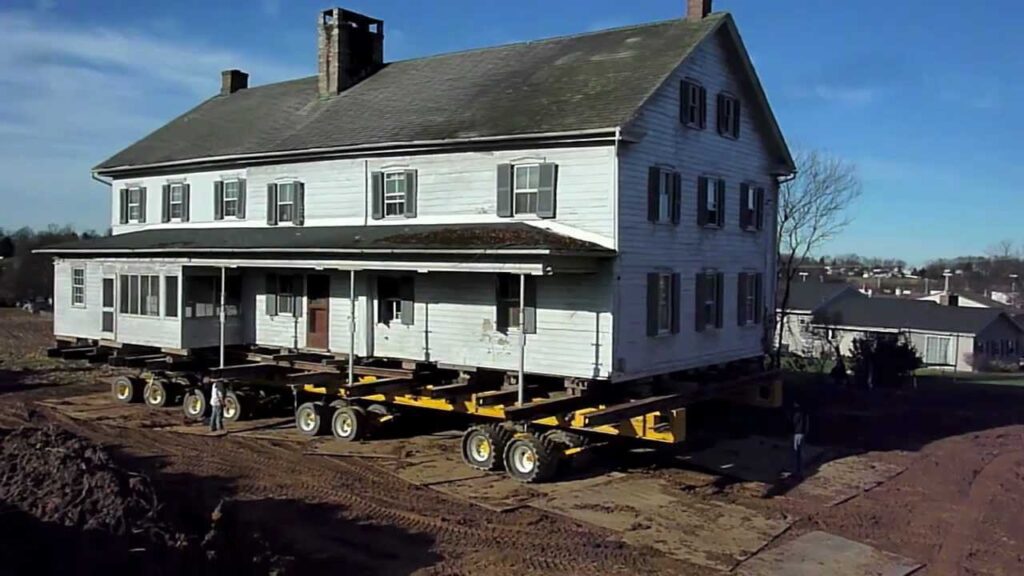
If you have ever seen photos of a house standing a few feet above the ground, resting on wooden blocks, it looks impossible, but that’s how professional house lifting companies work. The process combines engineering, teamwork, and timing. Every inch matters.
Step 1: Preparation and Planning
Before any jack touches the ground, experts study the house’s weight, structure, and foundation type. They inspect walls, flooring, and soil to understand how much pressure the ground can handle. At this stage, permits are secured, and all major utilities like gas, water, and electricity are safely disconnected.
Good planning here prevents major risks later. Even small mistakes in measurement or timing can shift the entire house during the lift.
Step 2: Structural Reinforcement
Inside the home, contractors brace key points like door frames and interior walls. This keeps the structure steady while lifting. You may see workers installing cross beams or tightening supports under floors. This step is all about strength and balance.
Step 3: Beam and Jack Placement
To prepare for lifting, workers cut small openings in the foundation walls. Through these spaces, large steel beams are slid underneath the home. Then, hydraulic jacks are positioned at equal points under each beam.
These jacks connect to a control system that lets all of them move together. This system is called a unified hydraulic jack setup, and it’s what keeps the lift perfectly even.
Step 4: Controlled Lifting
The actual lifting happens slowly, usually just a few inches at a time. Each stage is checked before going higher. Professional movers often raise the house in 6-inch steps, checking cracks, sounds, and beam pressure between rounds.
If you stand nearby, you’ll hear quiet creaks as the structure adjusts. It is normal as the house is simply finding balance.
Step 5: Cribbing and Stabilization
As the home rises, workers build cribbing stacks under it, thick oak blocks arranged like giant wooden Jenga towers. These hold the home safely while work continues below.
Cribbing keeps the home steady, even if lifting pauses for several days. This phase also allows engineers to access the foundation freely.
Step 6: Foundation Work
Once the house reaches the planned height, it rests on the cribbing while the team gets to the main reason for the project: repairing or replacing the foundation.
Old or damaged concrete is removed, and a new reinforced base is poured. In some areas, they install helical piers or steel piles for extra stability, especially where the soil is weak or prone to movement.
Step 7: Lowering and Finishing
After the new foundation cures, the house is gently lowered back into place. The beams and cribbing are removed one by one, and utilities are reconnected.
Finally, decks, stairs, and landscaping are rebuilt. At this stage, you’d hardly notice your house was ever lifted, except now, it is stronger, safer, and often higher than before.
Understanding the Materials and Tools Used in House Lifting
You may wonder what kind of equipment can lift an entire house. Here’s what professionals use and why each piece matters.
Material / Tool | Purpose |
Steel beams | Provide rigid support under the home for balanced lifting. |
Hydraulic jacks | Push the structure upward in small, even increments. |
Cribbing blocks (oak or pine) | Temporary supports that hold the house during work. |
Unified jacking system | Synchronizes all jacks for smooth, even motion. |
Concrete and rebar | Used to rebuild or reinforce the new foundation. |
Helical piers/screw piles | Deep anchors that stabilize the new base in soft soil. |
Pressure-treated wood & insulation | Used for sealing, moisture protection, and finishing under raised areas. |
Beyond the basics, these materials are chosen for precision. Steel and oak can bear heavy loads without bending, while hydraulic systems provide slow, steady control, the safest way to lift a house without cracks or structural stress.
Project Timeline and What Homeowners Can Expect
Every project is different, but understanding the timeline helps you stay realistic.
- Preparation & Permits: 1–2 weeks
- Lifting & Foundation Work: 3–6 weeks, depending on weather and foundation type
- Lowering & Finishing Touches: 1–2 weeks
So overall, house lifting can take anywhere from one to three months. The actual lift may happen in just a few days, but the surrounding work permits, curing concrete, and reconnecting utilities takes time.
When you hire experienced professionals, they’ll keep you informed at each step, showing progress photos and explaining safety checks. A good company treats your home like a live project, not a job number.
Cost, Savings, and Long-Term Value of House Lifting
When most homeowners first hear about house lifting, their first thought is, “How much will this cost?”
It is a fair question because house lifting is a serious project. But what many people don’t realize is that the real cost depends on the structure, soil, location, and purpose of the lift.
Let us go through it step by step so you can see how the cost actually builds up, and where the long-term savings come in.
Average Cost Range
The average cost of house lifting in 2026 usually falls between $20 and $80 per square foot. For smaller single-story homes, that can mean anywhere from $25,000 to $50,000 in total. Larger or more complicated projects may go beyond $100,000, depending on the structure and location.
Costs vary because every home is built differently. The type of foundation, how many steel beams are needed, and how easy it is for the crew to access the site all make a big difference in the final price.
- Basic foundation repair lift: around $20–$35 per sq. ft.
- Moderate lift for flood prevention: around $40–$60 per sq. ft.
- Full rebuild or basement addition: around $60–$80 per sq. ft.
These numbers sound big, but they often replace multiple smaller repairs that would add up over time.
Factors That Affect the Cost
Here are the main things that shape your total cost:
- Foundation condition: If your existing foundation is cracked or crumbling, it must be replaced completely.
- Soil quality: Weak or wet soil requires deep supports like helical piers, which adds cost.
- Home design: Multi-story homes or houses with brick exteriors take longer and need more structural support.
- Site access: Limited space for cranes, jacks, or beams increases setup costs.
- Permits and inspections: Every city or region has different regulations, which may include structural reports and safety clearances.
Where the Money Actually Goes
You may think most of the budget goes to the lifting itself, but here’s a clearer picture:
Stage | Percentage of Total Cost (approx.) |
Engineering, soil testing, permits | 10–15% |
Steel beams, hydraulic jacks, equipment | 15–20% |
Labor and supervision | 25–30% |
Foundation repair or rebuild | 20–30% |
Restoration and finishing work | 10–15% |
So the majority of what you pay actually goes into rebuilding or strengthening the structure — not just lifting it.
Long-Term Savings and ROI
Many homeowners decide to lift their homes after doing the math on future repairs.
Here’s an easy example:
A home in a flood-prone area spends about $10,000–$15,000 in flood damage repairs every few years.
Over 10 years, that is roughly $100,000–$150,000.
Lifting the home once for $70,000 removes that risk completely, and the structure lasts decades longer.
Beyond the repair savings, elevated homes often get:
- Lower insurance premiums (especially in flood zones).
- Higher resale value (buyers pay more for safety).
- Better energy efficiency when new insulation and moisture control are added.
- Extra usable space that adds long-term property value.
That’s why most engineers say house lifting is not an expense, but a long-term investment.
Financial Aid and Support Options
In the U.S. and many other countries, governments or local programs help homeowners offset elevation costs, especially in flood-prone zones.
For example:
- FEMA’s Home Elevation Grant Program can cover a large portion of flood-risk mitigation projects.
- Some regional housing authorities offer low-interest loans or rebates for foundation safety upgrades.
If you’re outside the U.S., check local building departments; many regions are adopting similar policies as weather risks rise.
Comparing the Cost of House Lifting vs Rebuilding
Rebuilding a home from the ground up can easily cost between $150 and $250 per square foot, and that’s before adding demolition, permits, or new materials. It’s a big investment and a long process.
House lifting, on the other hand, lets you keep what’s already yours: the walls, the roof, and the design you’ve grown attached to, while giving you a completely new foundation and better flood protection.
It usually comes out to about half the cost of rebuilding and causes far less disruption to your life. You still get the strength and safety of a new home, but you keep the original charm and history that make it feel like yours.
How to Know If It’s Financially Worth It
If your home is strong above ground but the foundation is starting to fail, lifting the house is almost always worth doing. It gives you a fresh base without losing the structure you already have.
In most cases, when foundation repairs reach around one-third of your home’s value, it makes more sense to lift the house and rebuild the foundation completely. That way, you fix the root problem instead of patching it again and again.
When you look at the total cost next to the long-term savings, safety, and added property value, house lifting often pays for itself within just a few years. This is especially true for homes in flood zones or areas where the ground tends to shift over time.
Mistakes Homeowners Should Avoid During House Lifting
Even though house lifting is becoming more common in 2026, a lot of homeowners still make small mistakes that cause big headaches later.
Here’s one of the most common and the easiest to avoid.
Skipping Soil and Structural Tests
The ground under your home holds everything you’ve built — and yet, it’s the one thing many people forget to check. Without a soil test, no one really knows how the ground will react once the lifting starts.
If the soil is too soft or stays wet, the supports can slowly sink or shift, and that’s when cracks begin to show up in walls or floors.
That’s why it’s important to have a qualified engineer test the soil and inspect the structure before any lifting starts. It’s a small step that prevents a lot of stress later.
Ignoring Permits and Local Building Rules
Every area has its own building codes and safety rules. Some homeowners think they can skip the permits to save time, but that usually backfires. Without the right paperwork, projects get delayed, or you might even face fines.
Some cities also need flood-zone certificates and post-lift inspections to confirm safety. The easiest way to handle all this is to let your house lifting company take care of the permits and inspection reports. A good contractor will walk you through every step so you’re never left guessing what comes next.
Forgetting Utility Disconnections
Before the lifting begins, all gas, water, and electrical lines must be safely capped or rerouted. You may not realize it, but even one active line can create serious safety issues once the house starts moving.
That’s why professional house lifting teams double-check every utility connection before the lift. It keeps your home safe and avoids expensive surprises later.
Not Planning for Access and Space
Many homeowners forget that heavy equipment and steel beams need room to move around the property. Large trucks, cranes, and hydraulic systems can’t squeeze through tight spaces.
Besides that, things like fences, decks, or even small garden sheds sometimes need to be removed for clear access. Preparing early keeps your project on schedule and saves you from last-minute delays or extra costs.
Trying to Stay in the Home During the Lift
It might seem easier to stay inside while the work happens, but living in a house that’s being lifted is never a good idea. There’s no running water, power, or gas, and the constant vibration can make the whole place feel unstable.
It’s always better to find a safe place to stay for a few weeks while the team finishes the lift. You’ll be more comfortable, and the crew can work faster without worrying about anyone inside.
Choosing Low-Cost Over Quality
Saving money feels good at first, but when it comes to house lifting, cheap work usually ends up costing more later. Some companies offer low quotes by skipping proper safety steps or using poor-quality materials. That’s when cracks, leaks, or uneven foundations show up months after the project is done.
You may already know this, but the safest choice is to compare experience, equipment, and reviews, not just price. The right team may charge a little more, but they’ll handle every inch of the process with care — and that peace of mind is worth every dollar.
Ignoring Insurance and Documentation
Before anything begins, take clear photos and short videos of your home inside and out. It only takes a few minutes, but if something unexpected happens, those images can save you from long arguments or claim delays.
Besides that, make sure you fully understand the insurance — yours and your contractor’s. Ask questions until everything makes sense. It’s always better to be confident now than regret it later.
When you prepare like this, the whole process runs smoothly. You stay in control, you know what’s covered, and the team can focus on doing their job safely. In the end, solid planning really is half the job done.
Final Thoughts: Is House Lifting Worth It in 2026?
If your home often floods, the floors feel uneven, or you simply need more space, house lifting can be one of the smartest decisions you make.
It isn’t just a project. It’s a way to protect your home, your memories, and the people living inside it.
More and more homeowners are choosing to lift instead of rebuild because it saves time, avoids costly repairs, and keeps the home they already love. You keep the same walls, the same rooms, and the same memories, only now the house stands stronger and safer for many years ahead.
Everything starts with a simple step. Talk to a house lifting expert, ask for an inspection, and understand what your options are. Sometimes, lifting your home is really just another way of lifting a weight off your shoulders.
Frequently Asked Questions
Most projects take between 4 to 8 weeks from start to finish, depending on size, weather, and foundation type. The actual lift may take only a few days, but the prep and finishing take longer.
Yes, once the project is complete and the home rests on its new foundation, it’s as safe — often safer — than before. The structure is leveled, secured, and reinforced with stronger materials.
The average cost of house lifting ranges from $20 to $80 per square foot, depending on the structure, soil condition, and reason for lifting. A full project can cost between $30,000 and $100,000.
Yes, brick houses can be lifted, but they require extra care and more support beams to prevent cracking. Professionals use reinforced steel beams and synchronized hydraulic jacks for stability.
Some insurance plans cover house lifting when it’s required after a flood or structural damage. For preventive lifting, you may need separate elevation coverage or government assistance.